How an Emergency Dentist Treats a Fractured Tooth Root
A fractured tooth root is one of those dental injuries that can look deceptively minor at first and turn serious very quickly. People often expect a dental emergency to be dramatic, with a tooth broken in half above the gumline or obvious bleeding. Root fractures do not always announce themselves that clearly. Sometimes the crown still looks mostly intact, but biting feels wrong, the tooth seems oddly loose, or a deep ache starts to build over a few hours. In other cases, the injury follows a fall, a sports impact, or biting something hard, and the patient knows right away that something is not right below the surface.
This is where an Emergency Dentist becomes essential. Root fractures are not something to watch for a week and reassess later. The timing of treatment can affect whether the tooth can be stabilized, whether the pulp survives, and whether the bone and surrounding ligament heal in a favorable way. Once a crack extends into the root, the problem moves beyond the visible enamel. Diagnosis takes judgment, careful examination, and often more than one type of radiograph.
The treatment itself is not one-size-fits-all. The location of the fracture matters. So does the direction of the fracture line, the amount of displacement, the age of the patient, the stage of root development, and whether the nerve tissue remains vital. A front tooth with a horizontal fracture in the middle third of the root is a very different clinical problem from a molar with a vertical root fracture extending down the side of the root. One may be saved with splinting and monitoring. The other may need extraction.
What a fractured tooth root actually means
When patients hear the word “fracture,” they often imagine the part of the tooth they can see. A root fracture means the break extends into the portion of the tooth anchored inside the bone, below the gumline. That immediately raises the stakes because the root is surrounded by the periodontal ligament, bone, blood vessels, and nerve tissue. Injury in this area can disrupt several structures at once.
Dentists generally think about root fractures in two broad patterns. A horizontal or oblique root fracture crosses the root, often after trauma. These are more commonly seen in front teeth, especially upper incisors, after a blow to the mouth. A vertical root fracture usually runs lengthwise along the root. It is more common in teeth that have had previous root canal treatment, large restorations, heavy biting forces, or posts placed inside the tooth.
Those distinctions are not academic. They guide the emergency response. A horizontal root fracture may have a reasonable prognosis if the tooth can be repositioned and stabilized promptly. A vertical root fracture tends to have a much poorer outlook because bacteria can track down the fracture line and inflame the surrounding bone, often making the tooth unsalvageable.
How patients usually describe it
The history often offers the first clues. Someone with an acute traumatic root fracture may say the tooth feels longer than the others, or that the bite suddenly hits that tooth first. They may report tenderness when touching the tooth with the tongue, mild bleeding around the gumline, or a sensation that the tooth “moves” slightly. Sometimes there is surprisingly little pain at rest, which can mislead people into delaying care.
A vertical root fracture often presents differently. The complaint may be a nagging pain when chewing that comes and goes, a pimple-like bump on the gum that keeps recurring, or deep tenderness near a tooth that already had a crown or root canal. I have seen patients spend months assuming they had a “gum problem” when the real issue was a root fracture slowly contaminating the bone around the tooth.
There is also an age factor. In younger patients, especially teenagers injured during sports, the root may still have some healing capacity that older teeth do not. In adults, the fracture pattern and the restorative history of the tooth play a larger role in the prognosis.
What an Emergency Dentist checks first
The first task in the emergency setting is to determine whether the tooth can be preserved and whether any immediate intervention will improve the odds. That requires more than a quick look.
An Emergency Dentist usually starts by asking how the injury happened and exactly when it occurred. A bicycle fall two hours ago, a baseball to the mouth yesterday evening, and a tooth that began hurting after chewing ice for weeks each point toward different mechanisms and different likely fracture types. The dentist will also ask whether the tooth was previously restored, crowned, root canal treated, or symptomatic before the injury.
The physical exam often includes inspection of the crown, gum tissue, and bite. Mobility matters. So does displacement. If the coronal part of the tooth has shifted out of position, the emergency visit may involve careful repositioning. The dentist will also assess percussion tenderness, probing depths around the tooth, bleeding from the sulcus, and adjacent soft-tissue injuries. A localized deep periodontal pocket on one side of a tooth raises suspicion for a vertical root fracture.
Pulp testing may be done, though it is not always definitive on the first day. A traumatized tooth can test nonresponsive early on and later recover. That is why experienced dentists avoid making irreversible decisions based on a single early pulp test unless the whole clinical picture points in the same direction.
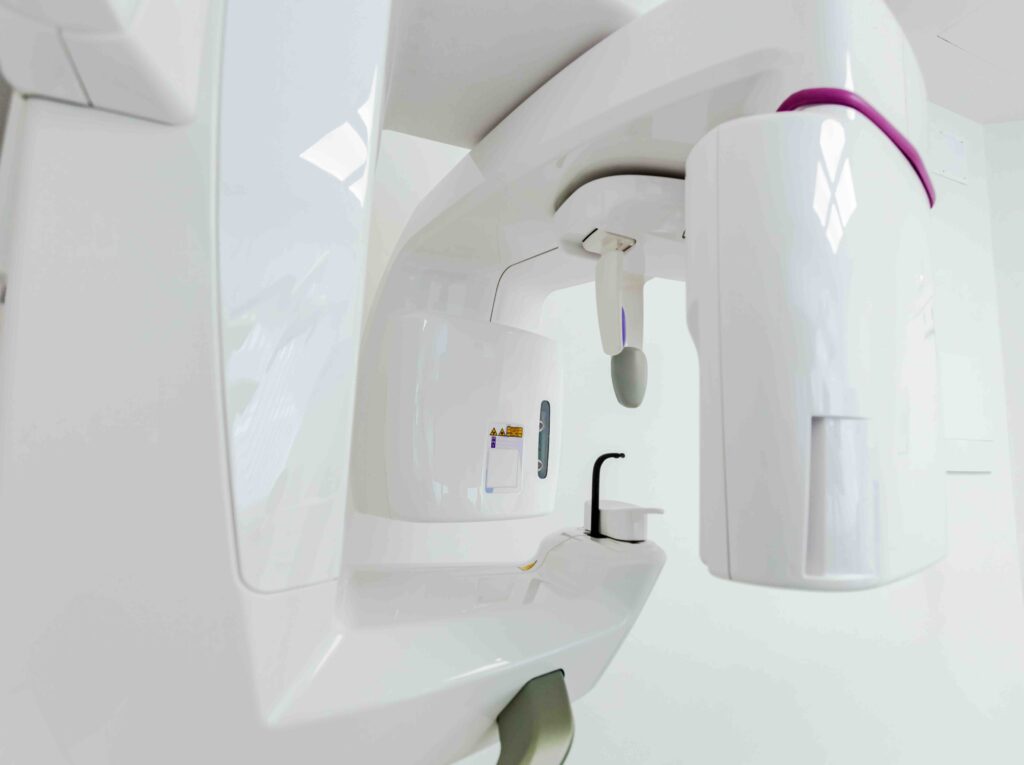
Radiographs are central, but they have limits. A fracture line can be hard to capture because it may not align with the angle of the X-ray beam. That is why several periapical views at different angles are often taken. In some cases, a CBCT scan is the most useful way to evaluate the extent and orientation of the fracture, especially when symptoms and standard films do not line up neatly.
The first priorities during emergency treatment
For a traumatic horizontal root fracture, early management usually focuses on preserving position and reducing additional injury. If the coronal segment is displaced, it is gently repositioned. The goal is to bring the tooth back into its proper alignment without causing more trauma to the ligament and pulp. Once repositioned, the tooth is commonly stabilized with a flexible splint attached to neighboring teeth.
This is one area where people are often surprised. The splint is not meant to freeze the tooth rigidly. Modern trauma management favors flexible stabilization because the periodontal ligament heals better when the tooth has slight physiological movement rather than being locked down completely. The splinting period depends on the fracture location and mobility. Mid-root fractures may be splinted for several weeks, while cervical fractures near the gumline often need longer stabilization because they are more unstable and less favorable.
Pain control is usually straightforward, but the dentist also checks the bite very carefully. Even a small high spot can load the injured tooth repeatedly and interfere with healing. A slight adjustment can make a real difference during the first week.
If there are associated crown fractures, exposed dentin may be sealed, or the broken portion may be temporarily restored. Soft tissue injuries are managed as well. Sometimes lip or cheek lacerations contain fragments of tooth, especially after impact injuries, and those need attention before the patient leaves.
When the nerve survives, and when it does not
One of the most important judgments after a root fracture is whether the pulp remains vital. In an ideal outcome, the tooth is repositioned, splinted if needed, and the pulp survives without root canal therapy. That does happen, particularly in younger patients and in fractures away from the cervical area.
Still, some teeth lose vitality over time. The signs may not appear immediately. A tooth that initially seems stable can develop persistent discoloration, pain, swelling, or radiographic changes near the fracture site or apex. Follow-up is where the real story unfolds. Trauma care is rarely one appointment and done.
If the coronal segment becomes necrotic but the apical fragment remains healthy, root canal treatment may be done only in the coronal portion up to the fracture line. That distinction matters because treating the entire root is not always possible or necessary. The apical segment often remains untouched if it is asymptomatic and shows no pathology. This surprises patients, but it is a well-established approach in selected horizontal root fractures.
By contrast, vertical root fractures have a different biology. Once the crack communicates with the periodontium along the root length, bacterial ingress becomes the recurring problem. Root canal treatment generally does not solve that. The tooth may continue to break down despite temporary symptom relief.
Why fracture location changes everything
A root fracture in the apical third, meaning near the tip of the root, often has a better prognosis than one near the neck of the tooth. The further toward the crown the fracture occurs, the more mobile the coronal segment tends to be, and the more difficult it is to maintain a healthy seal and stable healing.
Middle-third fractures fall somewhere in between. These are often the cases where timely emergency care can make a substantial difference. If the tooth is repositioned quickly and splinted appropriately, healing may occur with calcified tissue, connective tissue, or a combination of hard and soft tissues between the fragments. Not every radiograph looks textbook perfect afterward, but the tooth can remain comfortable and functional for years.
Cervical root fractures are the toughest. They are close to the gumline, exposed to heavier functional forces, and often involve significant Emergency Dentist mobility. In some carefully chosen cases, orthodontic or surgical extrusion, crown lengthening, or complex restorative planning may be considered later. In the emergency phase, however, the immediate question is usually whether the tooth can be stabilized at all and whether retention is realistic.
When extraction becomes the right call
People understandably hope every cracked tooth can be saved. Dentistry can do a great deal, but root fractures are one of the areas where restraint is sometimes the most honest and appropriate treatment.
Vertical root fractures are the classic example. If a tooth has a narrow deep probing defect, recurrent swelling, characteristic J-shaped or halo-type bone loss on imaging, and a fracture line that extends along the root, extraction is often the definitive treatment. Trying to preserve such a tooth with repeated antibiotics, bite adjustments, or retreatment usually prolongs discomfort and allows further bone loss.
Multi-rooted teeth introduce some nuance. A fractured root in a molar does not always mean the entire tooth must be removed. In selected cases, root resection or hemisection may be considered, particularly when the remaining roots are periodontally sound and the restorative plan is strong. These are not emergency-room style decisions in most cases, but they are part of the longer conversation after the acute pain is controlled.
Sometimes the emergency visit is about triage and honesty. If the fracture pattern makes the tooth non-restorable, the best care may be to remove the source of infection and pain promptly, preserve as much bone as possible, and discuss replacement options once healing has begun.
What treatment can look like in real practice
A common scenario involves a teenager hit in the mouth during a basketball game. The upper front tooth is slightly displaced backward, tender to touch, and mobile. The crown is intact except for a small edge chip. Radiographs reveal a horizontal root fracture in the middle third. In that case, the Emergency Dentist typically anesthetizes the area, repositions the tooth, verifies the bite, places a flexible splint, and schedules close review. If the tooth remains vital, no root canal may be needed at all.
A very different case is the middle-aged patient with a crowned premolar that has “never felt quite right” for months and now hurts sharply on release when chewing. There may be minimal swelling, but probing shows an isolated deep pocket on one side. Imaging may suggest a vertical root fracture. Here, emergency management may involve confirming the diagnosis, discussing prognosis plainly, controlling pain, and planning extraction rather than attempting heroic treatment that has little chance of success.
The difference between those two patients is not just the type of crack. It is the biology of healing, the anatomy of the tooth, and the likelihood that treatment addresses the actual cause rather than the symptoms around it.
What you should do before you can be seen
If you suspect a root fracture, the goal is to protect the tooth from further movement and get assessed quickly. Waiting to see whether it settles down is rarely a good strategy after trauma or sudden sharp biting pain.
- Avoid chewing on the affected side.
- Do not test the tooth repeatedly with your tongue or fingers.
- Rinse gently with lukewarm water if there is blood or debris.
- Use a cold compress on the outside of the face if swelling begins.
- Seek prompt care from an Emergency Dentist, especially after injury or sudden mobility.
These steps are simple, but they matter. Repeated movement can worsen displacement, and chewing on the tooth can convert a manageable fracture into a more unstable one.
Follow-up matters more than most patients expect
The emergency appointment is only the beginning. Root-fractured teeth need review because healing and complications reveal themselves over time. A tooth may look stable after splinting yet declare a pulp problem weeks later. Another may test negative at first and recover normal responses on future visits.
Typical follow-up includes reassessment of mobility, percussion sensitivity, bite, gum health, and radiographic changes. Splints are removed according to the injury pattern and healing progress. If the tooth darkens, develops swelling, or remains painful, the plan is adjusted. This is why trauma protocols often schedule reviews over months rather than days alone.
There is also a psychological piece to follow-up. Patients who leave an emergency visit feeling better often assume the problem is resolved permanently. With root fractures, especially traumatic ones, the quieter phase afterward is when discipline counts. Missing reviews can turn a salvageable tooth into a late failure that might have been managed earlier and more conservatively.
Questions patients often ask after diagnosis
Most people want to know three things right away: Will the tooth survive, will they need a root canal, and how soon they can eat normally. The honest answer to the first two is often “we need time and monitoring.” Dentistry has many situations where the outcome is visible immediately. Root fractures are not one of them.
Diet usually needs modification for a while. Soft foods, avoiding direct biting on the injured tooth, and being cautious with hard crusts, nuts, or tough meats is standard advice. Oral hygiene remains important, but brushing around a splint requires care and patience.
These are the practical points patients tend to remember best:
- A stable-looking tooth can still change over the next several weeks.
- Root canal treatment is sometimes needed later, not necessarily on day one.
- Vertical root fractures usually carry a far worse prognosis than horizontal traumatic fractures.
- Front teeth injured in sports often do better when treated promptly.
- Pain relief does not always mean the fracture has healed.
That last point is worth emphasizing. Symptoms can fade while disease continues quietly around a fractured root, especially when the issue is vertical and infection-related rather than purely traumatic.
The role of judgment in emergency dental care
Protocols matter, but this is an area of dentistry where judgment matters just as much. Two teeth can look similar on an initial X-ray and head in very different directions. A dentist’s role is to interpret the mechanism of injury, the radiographic findings, the mobility pattern, the age of the tooth, and the patient’s priorities, then recommend care that is both clinically sound and realistic.
Sometimes the best emergency treatment is conservative and protective, with splinting and monitoring. Sometimes it is decisive removal of a hopeless tooth before more bone is lost. Good care does not mean doing the most treatment. It means choosing the treatment that matches the biology of the fracture.
That is why a fractured tooth root deserves prompt evaluation rather than guesswork. When managed early by an experienced Emergency Dentist, some of these teeth heal surprisingly well. Others reveal quickly that saving them would cost time, money, and comfort without a meaningful chance of success. Knowing the difference is the heart of emergency dental treatment.
Dental Group Of Beverly Hills
8641 Wilshire Blvd #125, Beverly Hills, CA 90211, United States
+1 310-929-6335
FAQ About Emergency Dentist
What is considered to be a dental emergency?
Severe tooth pain, a knocked-out permanent tooth, uncontrolled bleeding, or a suspected dental infection can require urgent assessment. Contact a dentist promptly to describe your symptoms and arrange appropriate care. Trouble breathing or swallowing, rapidly spreading swelling, or a serious facial injury requires emergency medical attention; call 911 or go to an emergency department.
How to tell if tooth pain is serious?
Tooth pain needs prompt dental assessment when it is severe, persistent, disrupts sleep, or occurs with swelling, fever, pain on biting, or a bad taste. Symptoms alone cannot establish the cause, and an examination may be needed. Seek emergency medical care for breathing or swallowing difficulty, swelling affecting the eye or neck, or other signs of a rapidly worsening infection.
What are the red flags of a tooth infection?
Warning signs include facial or gum swelling, fever, worsening pain, pus or a bad taste, and difficulty opening the mouth. A dental abscess does not reliably resolve on its own and needs urgent dental care. Difficulty breathing or swallowing, rapidly increasing swelling, or eye involvement can indicate a dangerous complication and warrants immediate emergency medical care.